
New Lumber Research

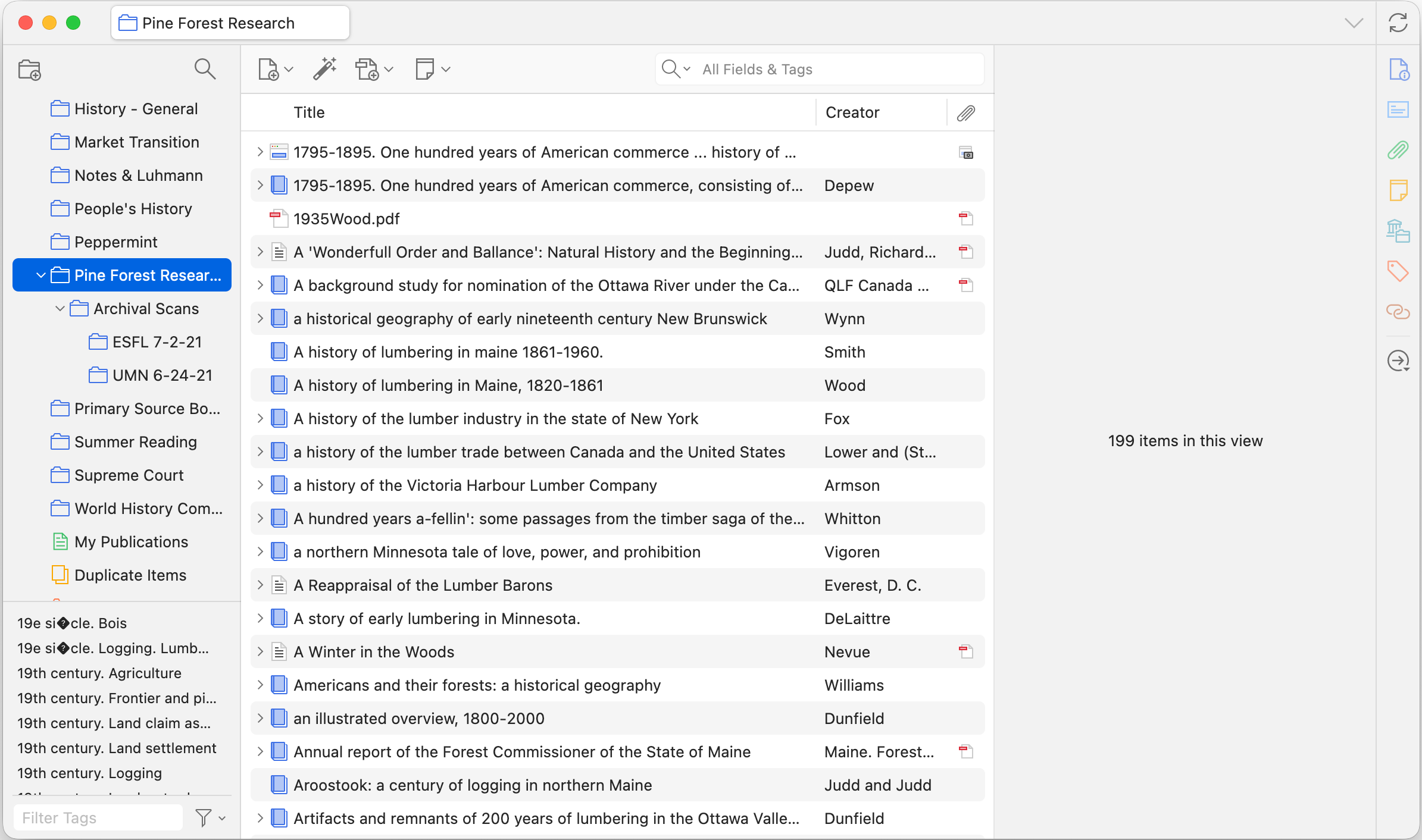
Update on the “Long Road Trip” idea I talked about yesterday. I did actually spend a big chunk of the day planning a trip. I decided I wanted to go all the way to the Canadian maritimes (but not quite as far as L’Anse Aux Meadows on Newfoundland) and see historical sites and especially lumber industry history, to prepare for a book on the Great White Pine Forest of North America and the lumber industry it enabled from the colonial era through the present.
There are a lot of elements of this story and it will take me several years to really work through them. But I can begin and post about it as I go. And I can fill in details in a non-linear way. For example, the more recent elements of the story are actually much closer to me in location. The end of the white pine forest was in northwestern Minnesota, near Red Lake. Logs were floated down the Red Lake River to Crookston, where they were sawn and then sent up the Red River of the North, toward Winnipeg.
Beyond those final stands of pine, the prairies of the Dakotas began. When lumbermen like Frederick Weyerhaeuser and Thomas J. Walker reached that boundary, they jumped right to the west coast. Weyerhaeuser to the Pacific Northwest and Walker to the forests around Mount Shasta in northern California. But that’s not technically a story of white pine. There is actually another, more recent story, within the bounds of the old white pine forest. The Menominee tribe of northeastern Wisconsin has been running a sustainable forestry business for over 150 years. So that’s also a trail I can pursue.
But as I said, the oldest pine forest commerce was on the east coast during the colonial and the early republic periods. So I’m excited about tracking down some of that information. This history happened on both sides of the Canadian border, since the pine forest extended into the St. Lawrence and Ottawa River valleys and into Georgian Bay, so half of this trip will be north of the Great Lakes. I’m going to travel for about three weeks and see as much as I can, while also driving over five thousand miles!
I have the first half of 2026 to prepare for this journey. An initial step will be to reacquaint myself with all the sources I had already pulled together, when I first began pursuing this topic in the spring of 2021. That’s easily over a hundred books and articles, not to mention bibliographies and lists of additional sources to pursue. I’m looking forward to dipping back onto this history and putting together a foundation that will help me look for the right stuff and ask appropriate questions when I visit the archives or museum exhibits of the northeastern lumber trade.
To that end, I’ve updated my Zotero and have cracked open my folders of “Pine Forest Research”. I’m going to start sorting through this material and rereading, making new notes as I go. I’ll report on my findings, as I find things.
FYI, the Michigan lumber industry is tied into the beginning of Dow Chemical in Midland, MI -- as told in
The Dow Story: The History of the Dow Chemical Company Hardcover – January 1, 1968
by Don Whitehead (Author)
[The Dow Story: The History of the Dow Chemical Company: Don Whitehead: Amazon.com: Books](https://www.amazon.com/Dow-Story-History-Chemical-Company/dp/B000O6B0LI/ref=sr_1_1?crid=1Z4NYF3UA2B9G&dib=eyJ2IjoiMSJ9.hSxVScS1wwYmupms4hGGYw.XFTBkOrlzFk55TBgSUhzFT8GQ_vsHTBMHHBAJWfbCn0&dib_tag=se&keywords=the+dow+story+don+whitehead&qid=1767677423&sprefix=the+dow+story%2Caps%2C203&sr=8-1)
Oh, pine lumber and pine forrests, I imagine you have John McPhee's The Pine Barrens as part of your reading. It is focussed on the New Jersey Pine Barrens and its ecosystem. Seeing the long drive, his collection of books on US geological history that make up Annals of the Former World may also be helpful, and read the relevant portions (I think two of the four books would cover the drive) and give underlying context.
McPhee is one of my favorite non-fiction writers and will read most anything he writes (or has written) about.