
Dependence

As I sometimes do, I turned this morning’s journal entry into a video and a post:
In the first week of Ancient and Medieval World History, I briefly take the students way back to the beginnings of the human species and then talk (rather quickly, since I have to cover it in one lecture) about how Homo sapiens moved out of Africa 80,000ish years ago and met cousins who had left previously. These meetings included one (or more) with Neanderthals, who had left Africa half a million years earlier and who had already survived four ice ages (glacial maximums) about 450,000, 350,000, 250,000, and 150,000 years ago. This survival would entail first and foremost moving when the glaciers advanced across northern Europe, which would have exposed them to a lot of challenges regarding where to live and where to get the resources they needed. Not necessarily the prey animals they depended on, which would have been rather obvious. But things like where to get the right kinds of stone to chip into spearpoints. High-silica rocks like chert, flint, jasper, and obsidian were most easily “knapped” into sharp-edged tools. Northern European sources of these rocks were less reliable and show long gaps in their use, compared to sources in “refugia” like Iberia that seem to have been more regularly visited. I assume they returned to northern sources during interglacials (this is shown in archaeological evidence) because these were closer to the places they were living and hunting than the still-available but more distant sources in what’s now Spain.
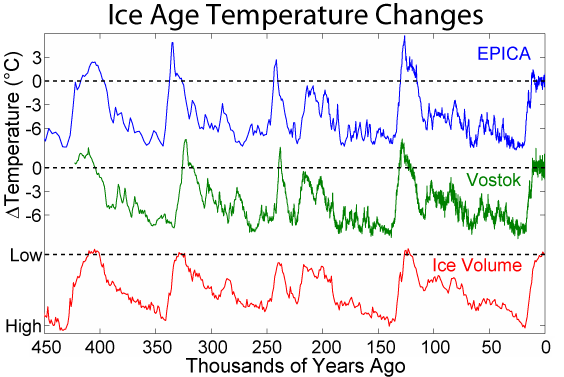
The point is, there were some really significant challenges to survival that these people faced. And they faced them several times over a period of half a million years. It’s difficult to imagine, especially given our assumptions that although these people probably had some form of language and could pass along information, they had no writing. Did they preserve knowledge like this over generations in oral traditions? Okay. But over a hundred thousand years?
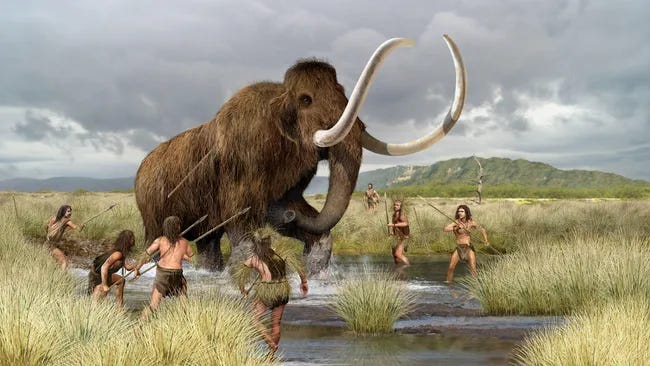
Thinking about this type of survival and reading my students’ responses and annotations of the text, I’m struck by the degree to which the lack of technologies surrounding these people forced them to be more capable as individuals. We often have a preconception about “primitive” people, that they were dumb. Mere “cave men” who were good at the violence needed to take down a wooly mammoth or defend against a cave lion, but little more. This seems ridiculous in several ways.
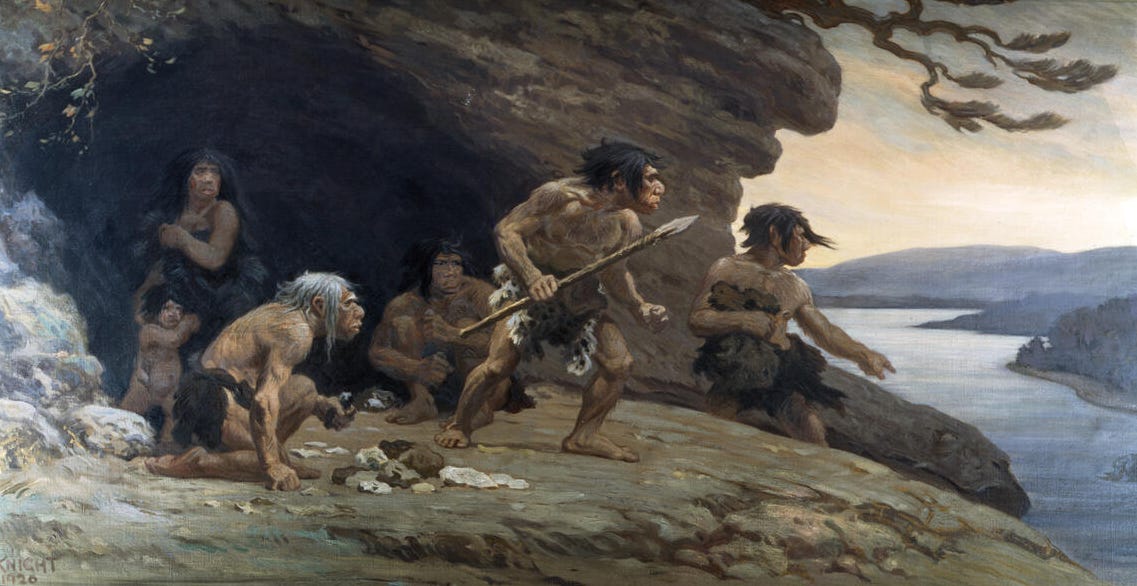
First, are we really saying it took nothing but brawn to take down an animal the size of an elephant with spears? Thinking about the it for a moment suggests planning and team coordination, at the very least. It also strikes me that the people who carried this knowledge and passed it on to the next generation, being crucial to the group’s survival, were probably held in pretty high esteem. This suggests a side-hypothesis that the greater the necessity of specialized knowledge is to survival, the greater the status of teachers will be in that society.
Funnily, this leads me back to my main point. The low esteem teachers receive in our current culture could be interpreted as a reflection on their apparent irrelevance to survival. I’m not saying teachers don’t still impart knowledge and skills that can help their students survive and prosper in the world; I think we still do. I’m saying that with all the technological crutches available to us today, it almost seems like we don’t need any skills. We can surf the waters of abundance and do just fine.
One of the odd stories that has been surfaced by podcasters like Bret Weinstein and has even recently been found buried in the current controversy over the Charlie Kirk assassination and the people surrounding him has been that his wife’s family business involved trying to convince the US government to take the threat of electro-magnetic disruption seriously. A solar flare or coronal mass ejection could basically short-circuit the American electrical grid. As could a terrorist strike or detonation of an EMP bomb. How many Americans would be helpless if there was suddenly no electricity?
More generally, how many of us are completely dependent on modern infrastructure for our day to day survival? How many of us could even feed ourselves without the industries of agribusiness, processed food manufacturers, global transportation networks, and supermarkets? The percentage of young people who have raised animals or who have gardened, or even have hunted or fished, is vanishingly small. We’ve passed the point where nearly half the world’s population lives in cities and another third lives in towns of more than 5,000 people. And this food dependence is not even to mention how we clothe ourselves. Or how we communicate with each other, share information, and organize our social interactions and politics. Would we know how to do any of this, without the technologies that have developed over the last century?
My point here is not only to call attention to the vulnerability of our culture. It’s to suggest there’s an inverse relationship between the infrastructure provided by our civilization and our personal capabilities. The individual “cave man” Homo sapien or even Neanderthal might be much more capable, skilled, and intelligent than the average modern living in a city today. We have also just been through a century of “deskilling” ourselves through mass production, automation, and consumerism. Now we’re facing AI.
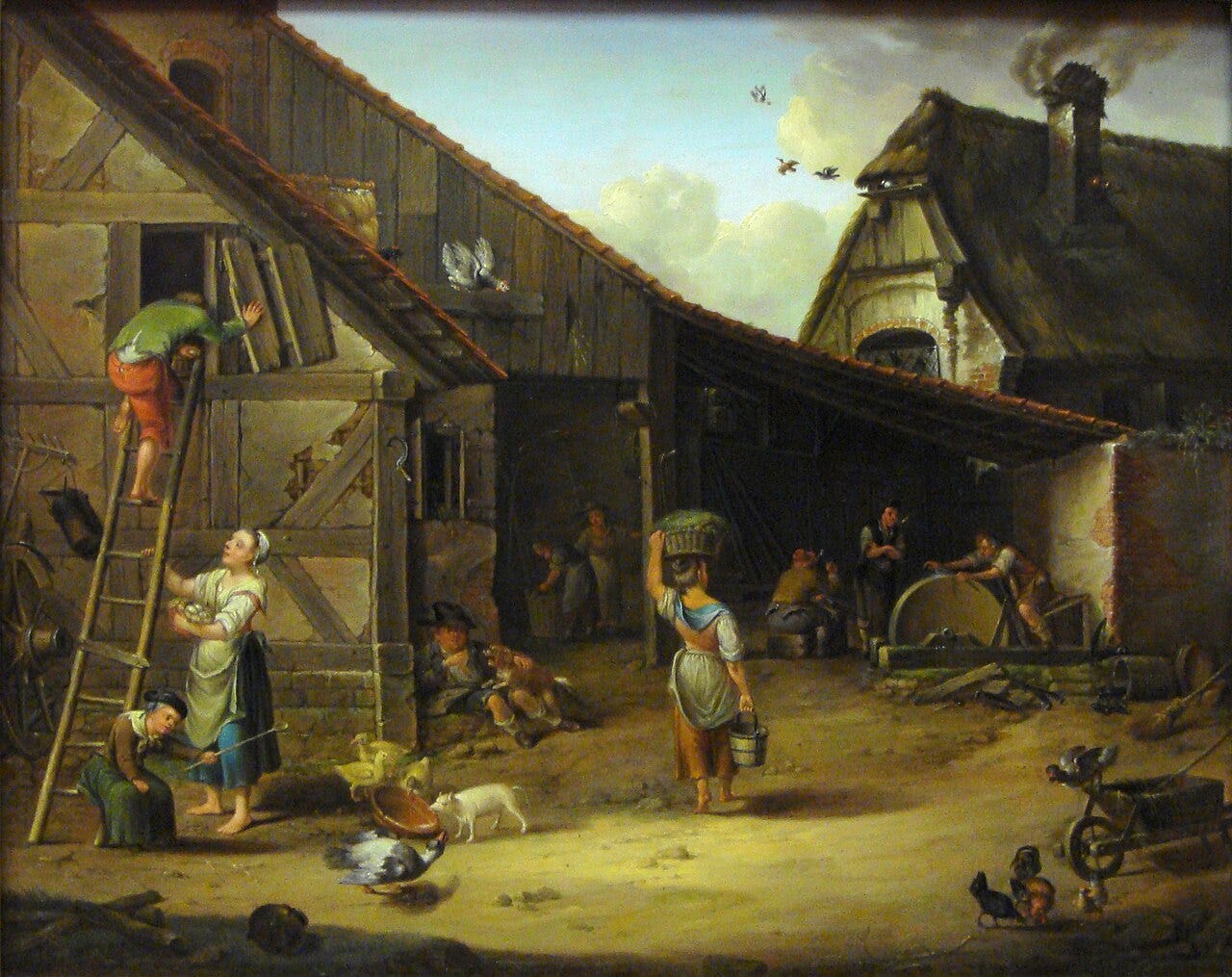
What does it mean for our national myths about the heroic, self-reliant individual who is the protagonist of all our stories of America? The “Yeoman Farmer” of the Jeffersonian ideal was a bit of a myth. Jefferson was heir to a southern plantation, not a frontiersman whose family could produce all the food and clothing they needed to survive. But at least his idealized American was a bit self-sufficient, and he distrusted even people who worked for wages because that made them “dependent”.
People of the past, who lived “closer to the land”, were probably also more likely to be able to survive a “crash” of technological culture. We have advantages they didn’t have, of course, which make our lifestyles more comfortable and maybe even arguably “better” in many ways than the societies of a century or a millennia ago. We certainly have people who have developed extensive specialized knowledge in fields that didn’t even exist in the past. But at the same time, we’ve lost some general skills that used to be necessary for survival and hopefully won’t be again.

I think it’s worth noticing and acknowledging that the growth of “civilization” that we describe in Ancient and Medieval World History is double-edged. It increases the comfort and duration of our lives, but possibly at a cost. We become more embedded in and dependent on the society in which we live. We become less and less able to survive on our own or even in small family, clan, or community groups. It becomes less reasonable, perhaps, to base all our social philosophy on atomized individuals, as if they even viable in today’s world. Maybe we maintain a fiction of the sovereignty of the individual, when push comes to shove. But don’t we also need to acknowledge some type of social responsibility, given the fact that we depend on society for our day to day existence?
In any case, I thought this was worth noting and saying something about. To call attention to this gradual shift from most of the world’s people being more or less self-reliant to most of the world being dependent, as civilization advances and spreads across the planet. And to give us all a chance to think about our relationships with the states and cultures we’re embedded in.